Charming Culture of Wae Rebo Village in Flores Island

Wae Rebo Village depicts traditional life, authentic and strong culture of the Manggarai community in the western part of Flores Island. Its location in the highlands of this island represents the harmony of the community’s culture and the beauty of nature that is still maintained.

Once you step up to this village, you will feel the aura of warmth and friendly welcome from the local community that has become part of the culture. Visiting this village makes you involved, learn and feel the way of life of Manggarai people traditionally.


Livelihoods and Crafts of Wae Rebo Villagers.

Daily life in the traditional village of Wae Rebo is rooted in agriculture, plantations, or sometimes skilled crafts such as weaving. These skills are often passed down through families and serve both practical and artistic purposes.

Agriculture and Plantations

The main livelihood of the Wae Rebo community is coffee plantations. when you visit here, you can be involved in the process of making coffee traditionally, especially if you visit during the harvest season. you can go to the garden and pick coffee beans that are ready to be harvested. you can even be involved in extracting coffee beans into coffee powder that is ready to be enjoyed. everything is done traditionally.

Note that this experience is only available during the coffee harvest season, which usually takes place in May and June.

Weaving

Weaving is usually done by the women of this village in their spare time. They usually weave Songket cloth which is part of the traditional clothing of the Manggarai community. Even though it is not their main activity, you can see women weaving nice pieces of cloth here. Their woven products also have unique motifs and patterns which usually correspond to the philosophy of the local indigenous community. The patterns created are usually related to nature, such as flowers, leaves, even animals. If you are interested, you can buy one or more for your collection at home from Wae Rebo village.


Cultural Attractions of Wae Rebo Village in Flores Island

Wae Rebo Traditional village is worth visiting since they offer distinctive holiday experiences for the visitors.Located on Flores Island in Indonesia, Wae Rebo Village offers unique cultural attractions, which are related to nature, local life, spiritual belief, and local customs.

Mbaru Niang

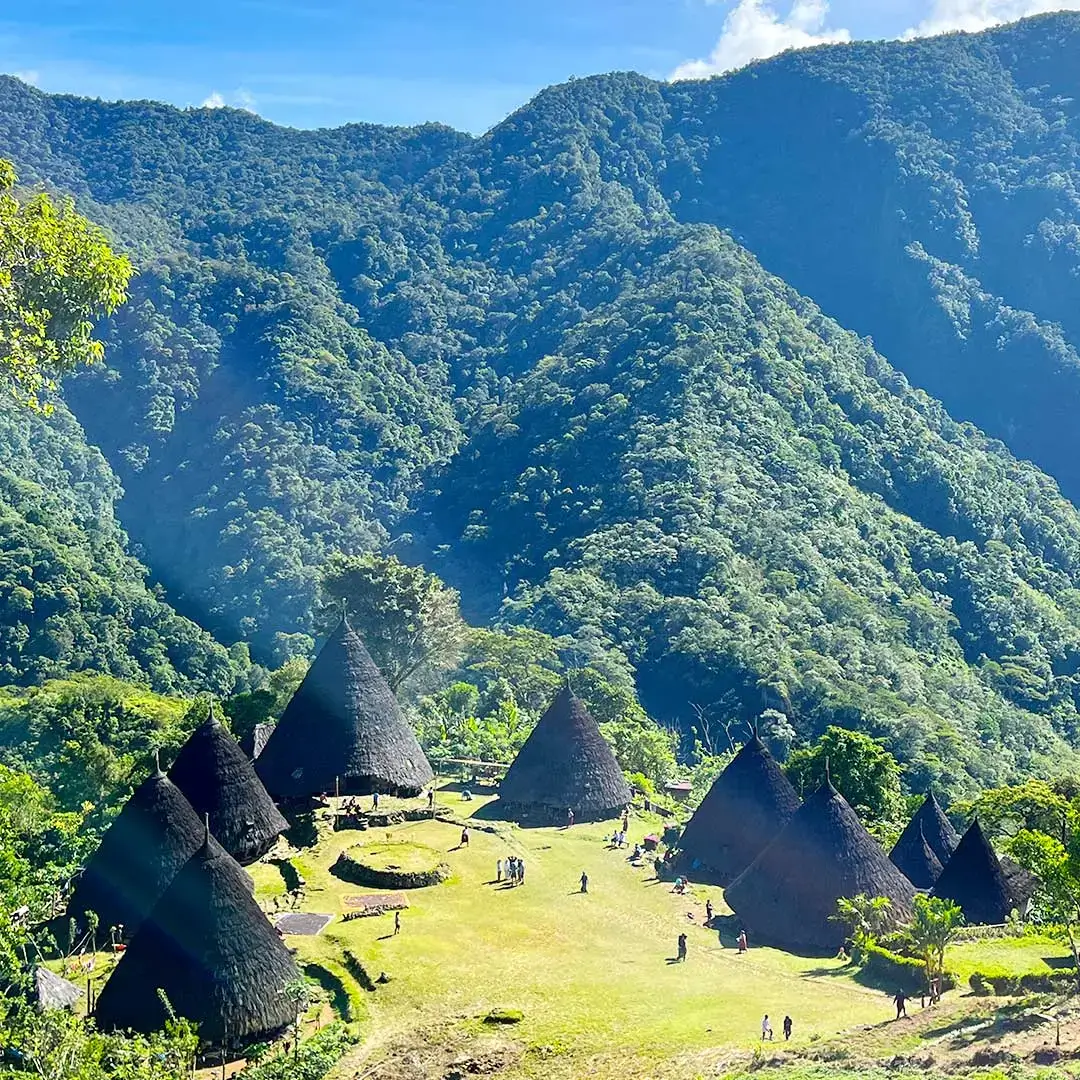
Mbaru Niang is the name for traditional houses of Manggarai People. It looks like a cone made from wood and palm fiber. The houses are used for the family as well as for storing gongs and drums used for local dance performances.The ceremonies usually take place in the huge communal house. If you visit this place, you can stay a night at the local house and enjoy the food offered by the villagers. You can sleep on the tikar, a mattress made from pandan leaves.

The cool mountain air makes it easy to breathe deeply and relax, far from the crowds and pollution of the city.

Nice scenes and singing birds

Since the local people take care of the environment well, the nature is preserved nicely. You can see local people starting to work early in the morning to harvest coffee or collecting beans.

The singing birds are among the trees and they are so beautiful, thus providing you with the real and simple country life, in which the villagers live close to nature.


How to Get to Wae Rebo Village

The journey to Wae Rebo starts from Labuan Bajo, a main gateway to Flores Island. From Labuan Bajo, you’ll drive for about 5 hours to Denge Village, the official trekking starting point. The road is a mix of paved and rough terrain.

Once in Denge, the real adventure begins: a 2 to 3-hour trek through dense tropical forest. The trail is steep and muddy in sections, but the reward is the stunning view of Wae Rebo’s Mbaru Niang houses appearing in a green valley. During the trekking, you will be accompanied by the chirping of the wild birds.

It is advisable  for you to include a tour guide on this tour to prevent you from losing your way up to Wae Rebo village. The tour guide will also help you with their knowledge about the village and natural conditions during you trip.


Best Time to Visit Wae Rebo Traditional Village

The ideal time to visit Wae Rebo is during the dry season, from March to October. here’s why:

  • Safety and accessibility; your journey to Wae Rebo village is through a hilly path and is in an area that is very prone to landslides when the rainy season comes. Due to this reason, sometimes tour activities to Wae Rebo village are closed during the rainy season, especially if there is a landslide. All this reason are for your safety.
  • Coffee harvest experience; If you want to participate in the traditional coffee-making process (picking, roasting, grinding), plan your trip in May or June – the peak harvest months.
  • Comfortable weather: Daytime temperatures are pleasant, while nights can be cool (around 15°C). Dry trails make the 2-3 hour trek much more enjoyable. a sunny day in the dry season would be a great opportunity to explore more about the village and the beauty of nature here in Wae Rebo Village.

Essential things to bring when visiting Wae Rebo

  • Hiking Shoes
  • Warm jacket and long pants (cold at night)
  • Cash ( no ATMs or card payments here in Wae Rebo)
  • Power Bank (Optional); charging is limited cause limited electricity in village (only nightime)

Ready to visit Wae Rebo Village?

Exploring Wae Rebo is not just a trip, it’s an immersion into a way of life that has survived for centuries. Let Top Komodo Tour take care of all the logistics: comfortable transport from Labuan Bajo and certified local guide. We will take care of everything and you only bring your sense of adventure.

Click here to see our Wae Rebo tour package

Note: Book at least 2 weeks in advance, especially for the May-June coffee harvest season.

Related Posts