
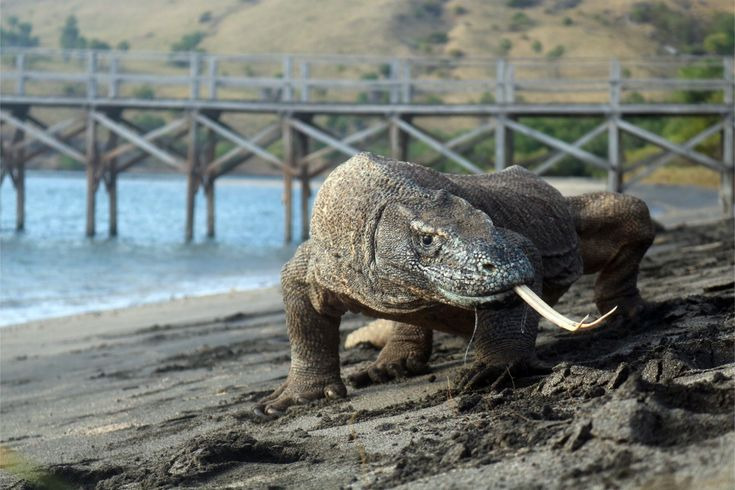
The Komodo dragon is one of the most fascinating predators in the world. Native to several Indonesian islands, including Komodo, Rinca, and parts of Flores, this giant monitor lizard sits near the top of its island ecosystem. But why are Komodo dragons apex predators?
The answer is not simply because they are large. Their position in the food chain comes from a combination of physical strength, hunting behavior, sharp serrated teeth, powerful senses, and the ability to take down relatively large prey.
Adult Komodo dragons can hunt animals such as deer and wild pigs, while also feeding on carrion when the opportunity arises. The Smithsonian’s National Zoo describes them as tertiary predators at the top of their food chain.
What Makes a Komodo Dragon an Apex Predator?
An apex predator is generally an animal that occupies the highest level of a food chain and has few or no natural predators as an adult. Komodo dragons fit this description within their native island ecosystems. They are carnivores capable of hunting large prey, while adult dragons face little predation from other species.
However, their lives are not completely free from danger. Young Komodo dragons can be attacked and eaten by larger adults, which is one reason juveniles spend much of their early lives in trees. Their status as an apex predator therefore applies mainly to mature individuals within their natural ecosystem.
They Are the Largest Living Lizards
One obvious advantage of the Komodo dragon apex predator is its enormous body size. Komodo dragons are the largest living lizards. Wild adults commonly weigh around 70 kilograms, while exceptionally large individuals can exceed 3 meters in length and weigh more than 150 kilograms. This size gives them a major advantage when competing for food.
A fully grown Komodo dragon can target prey much larger than the small animals eaten by many other lizards. Their diet can include deer, wild pigs, goats, monkeys, and other vertebrates. They also readily consume carrion. In an island ecosystem where large terrestrial predators are limited, being this large gives the Komodo dragon an important competitive advantage.
Their Hunting Strategy Relies on Stealth
Being big does not mean Komodo dragons constantly chase their prey. Instead, their hunting strategy often relies on patience and ambush. A Komodo dragon may remain still near a trail or another location where prey is likely to pass. When an animal comes close enough, the dragon can launch a sudden attack.
They can also move surprisingly quickly over short distances. The Smithsonian reports that Komodo dragons can briefly reach speeds of around 16 to 20 kilometers per hour. This combination of patience, camouflage, and short bursts of speed allows them to conserve energy while still being effective hunters.
Their Sense of Smell Helps Them Find Prey
Another important reason for the Komodo dragon’s success is its remarkable sense of smell. Rather than depending primarily on vision, Komodo dragons use their long, forked tongues to collect chemical particles from the air. These particles are then analyzed through the Jacobson’s organ in the roof of the mouth. This helps the reptile determine where potential food is located.
Their ability to detect the scent of carrion from several kilometers away is particularly useful because Komodo dragon diet is not limited to animals they actively kill. They are also highly capable scavengers. This flexible feeding behavior is another advantage in an island environment where food availability can change.
Their Teeth Are Designed to Tear Flesh
Komodo dragons do not have teeth designed for chewing food like humans do. Instead, their teeth are curved and serrated, making them highly effective at cutting and tearing flesh.
When attacking prey, a Komodo dragon can bite into soft tissue and use its powerful neck muscles to pull and shake its head. This creates deep wounds and allows the animal to remove large pieces of flesh.
Research on Komodo dragon predation has described this as a “grip-and-rip” feeding mechanism. The combination of serrated teeth and strong neck muscles helps compensate for the fact that the species does not rely on an exceptionally powerful crushing bite. That makes their teeth one of the most important features behind their effectiveness as predators.
Komodo Dragon Venom Makes the Bite Even More Effective
The Komodo dragon venom is another part of its predatory arsenal. Scientific research has identified venom glands in Komodo dragons containing compounds associated with anticoagulant and hypotensive effects. These substances can potentially contribute to blood loss and shock after a bite.
This is important because the old popular explanation that Komodo dragons depend mainly on bacteria in their saliva is overly simplistic.
Modern research points toward a more complex combination of deep tissue injury and venom-related effects. The bite can cause substantial bleeding, while venom may interfere with blood clotting and contribute to falling blood pressure. For prey that manages to escape the initial attack, the injuries can still become serious.
What Do Komodo Dragons Eat?
The Komodo dragon diet changes depending on age and body size. Young dragons primarily feed on smaller animals such as insects, small lizards, snakes, and birds. As they grow, they begin targeting larger prey. Adult Komodo dragons can eat:
- Deer
- Wild pigs
- Goats
- Monkeys
- Smaller reptiles
- Birds and other animals
- Carrion
Deer are particularly important prey in their native habitat. Large adults can also attack very large animals, although successfully bringing down such prey is not an everyday occurrence. This broad diet allows Komodo dragons to take advantage of whatever food is available.
Adult Komodo Dragons Have Few Natural Predators
Another reason why are Komodo dragons apex predators is that mature dragons have very few animals capable of regularly hunting them. Their large size, strong limbs, claws, teeth, and defensive abilities make them difficult prey.
The biggest threat to young dragons can actually come from other Komodo dragons. Adult dragons are known to be cannibalistic, meaning smaller individuals must avoid larger members of their own species.
As they grow larger, however, the balance changes. Their size makes them increasingly difficult for other animals to prey upon. This is one of the clearest differences between juvenile and adult Komodo dragon ecology.
They Rule a Unique Island Food Chain
The Komodo dragon food chain is strongly influenced by the isolated nature of the islands where these reptiles evolved. Komodo dragons share their habitat with herbivores such as Timor deer and wild pigs, along with many smaller animals. As large carnivorous reptiles, adult dragons occupy a high trophic position within this ecosystem. However, scientists have also found that Komodo dragons do not function exactly like large mammalian apex predators such as lions or tigers.
A 2020 ecological study found that Komodo dragons have different metabolic and population dynamics from typical apex mammalian predators. Their relatively low metabolic requirements allow them to survive with less frequent hunting, and they also rely significantly on scavenging. So, calling them apex predators is accurate in terms of their position in the food chain, but their ecological role is uniquely adapted to island life.
Why Are Komodo Dragons Such Successful Predators?
When all these characteristics are combined, the reason becomes easier to understand. Komodo dragons are successful because they do not depend on a single hunting advantage. Instead, they use several adaptations together:
- Large body size helps them compete for food.
- Powerful limbs and claws help them attack and control prey.
- Serrated teeth are effective at cutting flesh.
- Strong neck muscles help create deep wounds.
- Venom can contribute to blood loss and shock.
- An exceptional sense of smell helps locate prey and carrion.
- Ambush tactics allow them to conserve energy.
- A flexible diet allows them to hunt or scavenge.
Together, these traits make Komodo dragon hunting behavior remarkably effective for their environment.
See Komodo Dragons in Their Natural Habitat
Understanding why are Komodo dragons apex predators makes seeing one in the wild even more fascinating.
Komodo National Park is one of the few places where travelers can observe these remarkable reptiles within their natural island habitat. A guided trek can offer the opportunity to see Komodo dragons while also exploring the landscapes, beaches, and marine ecosystems that make the region unique. If you are planning a trip from Labuan Bajo, choosing the right itinerary can make it easier to experience the national park comfortably and responsibly.
Explore Komodo National Park with Top Komodo Tour
Seeing a Komodo dragon in photographs is one thing. Watching one move through its natural habitat is a completely different experience. Top Komodo Tour can help you arrange your Komodo National Park adventure based on your schedule and travel preferences. You can choose from organized Komodo trips, a more flexible private Komodo tour, or a car rental in Labuan Bajo if you also want to explore destinations around Flores.
Whether you are visiting specifically to see Komodo dragons or want to combine wildlife encounters with Padar Island, Pink Beach, snorkeling, and other destinations, a well-planned itinerary can make your journey more comfortable. Start planning your Komodo adventure and experience one of Indonesia’s most extraordinary predators in the place where it belongs.
FAQ
Are Komodo dragons apex predators?
Yes. Adult Komodo dragons occupy a top position in their native island food chains and have very few natural predators. They are capable of hunting large prey and also consume carrion.
What makes Komodo dragons apex predators?
Their large body size, hunting strategy, powerful claws, serrated teeth, strong neck muscles, keen sense of smell, and venom all contribute to their effectiveness as top predators.
What do Komodo dragons eat?
Komodo dragons eat a wide range of meat, including deer, wild pigs, goats, monkeys, smaller animals, and carrion. Their diet changes as they grow.
Do Komodo dragons have predators?
Adult Komodo dragons have very few natural predators. Young dragons are more vulnerable and can be eaten by larger Komodo dragons, which makes cannibalism an important survival challenge for juveniles.
Are Komodo dragons venomous?
Yes. Researchers have identified venom glands and compounds associated with anticoagulant and hypotensive effects in Komodo dragons. Their predatory abilities involve a combination of venom and severe physical wounds.
