
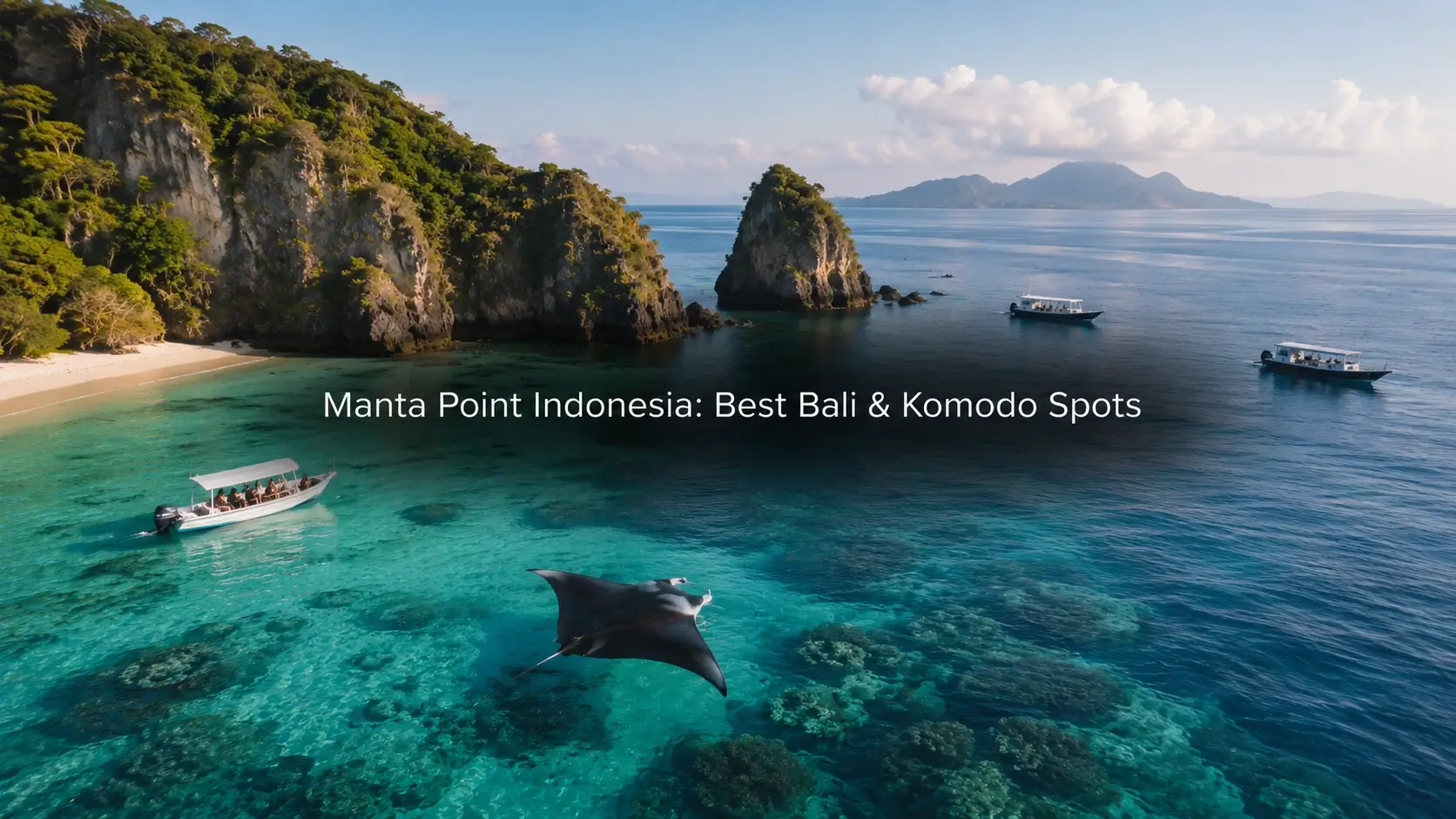
Where to See Manta Rays in Indonesia: A Complete Guide to Bali, Nusa Penida, and Komodo
Welcome to Indonesia’s stunning underwater paradise. For true adventurers, ocean lovers, and tourists looking for the most memorable holiday experience, the archipelago’s waters hold an extraordinary natural secret. We are talking about face-to-face encounters with one of the most graceful and majestic marine creatures in the world, the manta ray. Meeting these gentle giants is a dream for many, and luckily, Indonesia has some of the world’s best spots to make it happen.
Throughout this article, we will dive deeper into the charm of various locations known as manta ray havens. From the beauty of limestone cliffs in Bali to the exotic islands in eastern Indonesia, get ready to plan your extraordinary journey. This experience goes beyond a simple vacation because it connects you directly with the raw beauty of mother nature.
Main Attraction of Manta Point
Before we step further into each destination, let us understand why these manta ray encounter locations are so special. Manta rays are giant marine animals with a wingspan that can reach several meters, yet they are very docile and completely harmless to humans because they do not have a venomous sting like other types of stingrays. These majestic creatures love tropical waters rich in plankton, which is their main food source.
A location designated as a manta point is usually a cleaning station area. In this specific zone, manta rays will swim around calmly while letting small fish clean parasites from their massive bodies. This natural phenomenon provides a golden opportunity for tourists and divers to see their graceful dance from a fairly close distance. Indonesian waters, passed by nutrient-rich ocean currents, make it a perfect natural habitat for manta ray populations throughout the year.
The Undeniable Charm of Manta Point Bali and Nusa Penida
For most tourists, the Island of the Gods is always the main gateway for a perfect tropical adventure. However, your adventure is not complete if you have not crossed slightly southeast to a cluster of small islands that offer magical underwater charms. The manta point bali area actually refers to the waters around Nusa Penida, an exotic coral island located not too far from the mainland of Bali.
The journey to manta point nusa penida usually starts from Sanur harbor using a fast speedboat. Upon arrival at the location, you will be greeted by the sight of towering giant limestone cliffs bordering the deep blue waters of the Indian Ocean. Beneath the surface of these waves is where the real magic happens. Strong underwater currents bring tons of fresh plankton every day, attracting dozens of manta rays to gather and dance around the vibrant coral reefs.
Many local and foreign tourists come specifically to enjoy the manta point snorkeling nusa penida activity, which is already very famous internationally. Imagine floating on the surface of crystal-clear water, feeling the fresh sea breeze, and suddenly seeing a large black shadow swimming slowly from the seabed towards you. The sensation of seeing giant wings flapping gently in the water gives tremendous peace and awe. The manta rays in these waters are very accustomed to human presence, so as long as you stay calm, they will not hesitate to swim right past you.
Exploring the Exoticism of Manta Point Labuan Bajo and Komodo
If you want to take this adventure to a more epic level, then step further east to the province of East Nusa Tenggara. Here, you will find ancient natural beauty combined with abundant marine wealth. The manta point labuan bajo destination is one of the biggest reasons why thousands of phinisi ships and tourist boats sail across these archipelago waters every year. Labuan Bajo is not only about the legendary Komodo dragons but also about its world-class underwater life.
Geographically, this encounter location is within the Komodo National Park area. Therefore, this spot is also often called manta point komodo by tour operators and professional divers. The water characteristics around Komodo are very different from Bali. Here, you will be presented with a landscape of savanna islands that turn yellow in the dry season and green in the rainy season, creating an extraordinary contrast with the turquoise and crystal blue seawater.
The currents in Komodo waters are known to be quite strong and dynamic because they are the meeting point between the Indian Ocean and the Flores Sea. These incredible natural conditions create a very healthy ecosystem for giant manta rays. The species often found in these waters can be much larger, and sometimes they swim in groups consisting of a dozen to dozens at a time. Seeing them line up against the current while filtering plankton is a spectacular sight that places this location as one of the most elite diving and snorkeling destinations in the world.
Comparing the Top Manta Ray Destinations
| Destination Feature | Nusa Penida (Bali) | Komodo National Park (Labuan Bajo) |
|---|---|---|
| Accessibility | Easily accessible via a short speedboat ride from mainland Bali | Requires a flight to Flores and a boat tour or liveaboard trip |
| Landscape scenery | Dramatic limestone cliffs and deep blue oceanic waters | Rolling savanna hills with pristine turquoise bays |
| Current conditions | Moderate to strong swell, generally manageable for beginners | Strong and dynamic currents, ideal for experienced swimmers and divers |
| Marine Life Scale | Resident reef mantas that are incredibly friendly and playful | Larger oceanic and reef mantas often spotted in massive feeding groups |
The Fun and Thrill of Manta Point Snorkeling
You do not need to be a professional diver with a scuba diving certificate to enjoy this underwater beauty. Enjoying a manta point snorkeling session is a highly inclusive option that can be enjoyed by anyone, provided you have basic swimming skills and the courage to be in the open sea. This makes it a perfect family activity or a solo adventure for nature enthusiasts.
Professional tour operators will always ensure your safety by providing complete equipment such as life jackets, masks, and perfectly fitted fins. When snorkeling, you will be guided to move along with the ocean currents in a relaxed manner. The most amazing thing about snorkeling with mantas is the fact that these animals often swim very close to the water surface. You just need to lower your face into the water, breathe calmly through your snorkel, and let yourself be hypnotized by their movements that resemble eagles soaring in the sky.
Important Tips and Etiquette for Water Interactions
To ensure your trip runs smoothly and the marine ecosystem is preserved for future generations, there are several important guidelines agreed upon globally by marine conservation communities. You need to pay attention to the following steps before deciding to jump into the water.
- You must maintain a minimum safe distance of about three meters from the manta rays so the animals do not feel threatened by your presence
- It is strictly forbidden to touch the body or wings of a manta ray because human touch can damage the protective mucus layer on their skin which serves to prevent infection
- Ensure you always move calmly in the water and avoid splashing or making excessive noise that could startle the marine life
- You are strongly advised to use reef-safe sunscreen because the chemicals in regular sunscreen can pollute the water and kill the coral ecosystem
- Do not ever swim chasing the manta rays from behind because this will cause them to swim away immediately and leave the cleaning station area
- You must always pay attention to the directions from your local tour guide because they deeply understand the ocean current conditions and know exactly which spots are safest for you
Planning Your Next Adventure
Indonesia gives you the luxury of choosing which world-class destination you want to explore first. Whether you choose to escape for a moment to the dramatic cliffs of Nusa Penida in Bali or plan an exotic multi-day voyage across the waters of Labuan Bajo in the Komodo National Park, the experience of meeting manta rays will restore your connection with the beauty of the universe.
Prepare your holiday gear, bring your best underwater camera, and get ready to carve a travel story that you will never forget. Make sure you book your trip with Top Komodo Tour, a trusted operator who not only prioritizes passenger safety but also has a strong commitment to sustainable tourism. Happy planning for your holiday trip and see you in the mesmerizing depths of Indonesia’s blue ocean.
Frequently Asked Questions
1. What is the best time of year to visit these manta points?
The dry season spanning from May to October provides the most optimal weather conditions and excellent underwater visibility for spotting marine life.
2. Are there any specific age limits for participating in these snorkeling tours?
Most operators welcome children on the boats but jumping into the open water requires strong basic swimming skills and direct parental supervision.
3. Do I need to bring my own snorkeling gear?
Tour providers generally supply complete and well-maintained equipment including fins and masks so you do not need to bring your own heavy gear.
4. What happens if the manta rays do not show up during the trip?
Since wildlife encounters are naturally unpredictable operators will usually guide you to alternative vibrant coral reefs to enjoy other spectacular marine creatures.
5. Can non-swimmers still see the manta rays from the boat?
The water clarity at these locations often allows passengers to clearly see the giant shadows of the rays swimming near the surface right from the boat deck.
