
If you think of Komodo National Park, the first image that probably comes to mind is a Komodo dragon walking across a dry hillside. But there is much more to the landscape than its famous reptiles. The national park is home to a surprisingly diverse range of vegetation. From wide savanna grasslands and lontar palms to mangroves, coastal plants, and tropical forest species, the plants found here have adapted to a landscape shaped by seasonal rainfall, strong sunlight, and relatively dry conditions.
So, what plants grow in Komodo National Park? The answer depends on where you are in the park and the time of year you visit. Some areas are dominated by golden grass and scattered trees, while others support denser vegetation around freshwater sources and coastal environments.
What Plants Grow in Komodo National Park?
Komodo National Park contains several types of vegetation, reflecting the different environments across its islands. The climate is relatively dry compared with many other parts of Indonesia, which is why the landscape often looks more like tropical savanna than dense rainforest. Some of the most recognizable plants in Komodo National Park include:
- Savanna grasses
- Lontar or palmyra palms
- Mangrove vegetation
- Tropical shrubs and bushes
- Trees found in dry forest areas
- Coastal vegetation
- Plants growing around freshwater springs and streams
These plants are important not only because they create the distinctive scenery of Komodo, but also because they provide food, shelter, and habitat for wildlife.
Savanna Grass Covers Much of the Landscape
One of the most noticeable features of Komodo National Park vegetation is its extensive savanna. Large areas of Komodo, Rinca, and several surrounding islands are covered by grasses that can change dramatically with the seasons. During the rainy season, the hills can become green and fresh. As the dry season progresses, much of the grassland turns yellow or golden.
This seasonal transformation is one reason the scenery can look completely different depending on when you visit. The savanna is also an important habitat for Komodo dragons and other animals. Open grassland allows the giant reptiles to move between different parts of their territory while also providing suitable areas for other wildlife.
Lontar Palms Are an Iconic Part of Komodo’s Landscape
If you look at photographs of Komodo Island or Rinca Island, you may notice tall palms standing above the surrounding grassland. These are often lontar palms, also known as palmyra palms. Lontar palms are well adapted to the dry conditions found across parts of the Lesser Sunda Islands. They can survive in environments where rainfall is strongly seasonal, making them particularly suited to the landscape of Komodo.
Beyond their ecological importance, lontar palms also have cultural significance in parts of eastern Indonesia. Various traditional communities use parts of the palm for food, materials, and other purposes. Their distinctive shape also adds another layer to the scenery, especially when a solitary palm rises above the golden hills.
Dry Forests Support More Than Just Grass
Although savanna dominates many open areas, Komodo Island plants are not limited to grasses and palms. The park also contains dry forest vegetation, particularly in areas where conditions are more favorable for trees and shrubs. These plants can create pockets of shade and denser vegetation across the islands.
Dry forest is especially important for wildlife because it provides shelter and food. During the hotter and drier months, areas with thicker vegetation can also provide valuable protection from the sun. The exact plant communities vary between locations, so a hike through one part of the park may look very different from another.
Mangroves Grow Along the Coast
Komodo National Park is not only made up of hills and dry land. Along sheltered coastlines, you can also find mangrove forests. Mangroves are specially adapted to salty or brackish water and muddy coastal environments. Their complex root systems help stabilize shorelines while creating important habitats for fish, crabs, birds, and other marine and coastal species.
This makes mangrove vegetation an important part of the wider ecosystem connecting the park’s land and surrounding waters. If you explore the national park by boat, snorkeling, or kayaking, you may encounter these coastal ecosystems in quieter bays and sheltered areas.
Read More: Things to Do in Komodo National Park Besides Seeing Dragons
Coastal Plants Adapt to Sun, Wind, and Salt
The coastline of Komodo National Park supports another group of plants adapted to challenging conditions. Coastal vegetation has to deal with strong sunlight, wind, sandy or rocky ground, and exposure to salt. As a result, many plants growing near beaches have different characteristics from those found farther inland.
These plants play an important role in helping stabilize coastal areas and providing shelter for smaller animals. The vegetation around beaches can also contribute to the visual character of destinations such as Pink Beach, where dry hills, coastal plants, white and pink sand, and turquoise water come together to create the landscape travelers often associate with Komodo.
Why Is the Vegetation in Komodo So Dry?
One of the easiest ways to understand the flora of Komodo National Park is to look at its climate. Komodo lies within the Lesser Sunda Islands, a region that experiences a pronounced dry season. Compared with wetter parts of Indonesia, rainfall is more seasonal and the dry period can last for several months.
This helps explain why you see so much savanna and dry forest rather than dense evergreen rainforest. The vegetation has adapted to these conditions over time. Some plants can tolerate long periods with limited rainfall, while others grow more actively when the rainy season arrives. As a result, the landscape is constantly changing throughout the year.
Do Plants Change Between the Wet and Dry Seasons?
Yes. Seasonal changes are one of the most interesting characteristics of Komodo Island vegetation. During the rainy months, rainfall allows grasses and other vegetation to grow more actively. Hills that appear brown or golden during the dry season can become noticeably greener.
During the dry season, vegetation becomes less lush and many grasslands take on their characteristic golden-brown appearance. This seasonal difference also affects the overall experience of visiting Komodo National Park. Travelers who visit at different times of the year may see very different landscapes even when following similar trekking routes.
Why Are These Plants Important to Komodo Dragons?
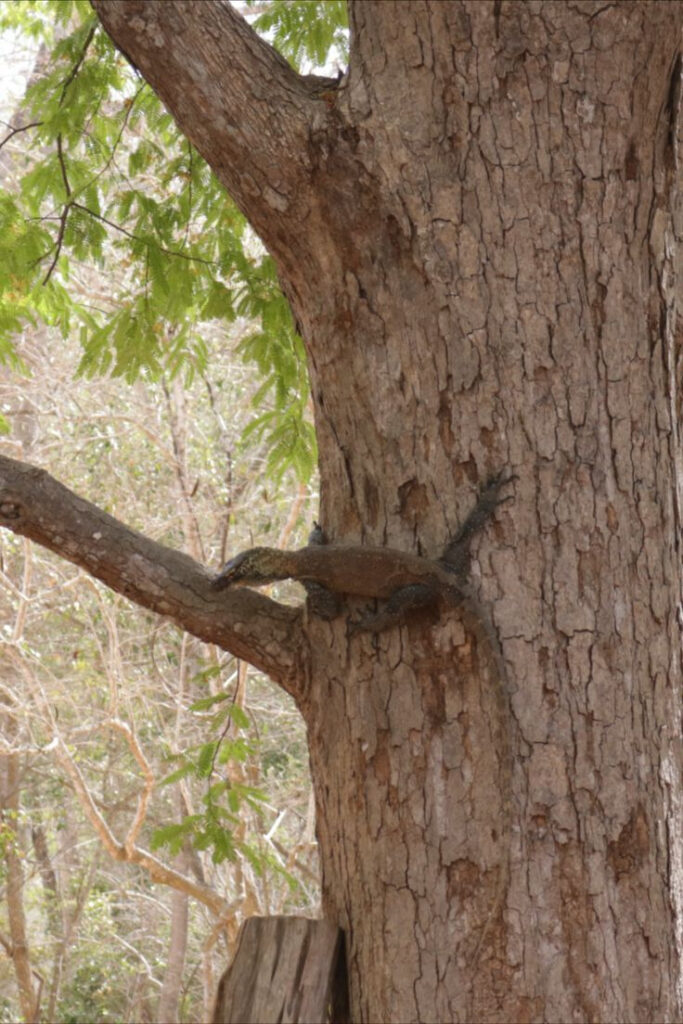
Plants are an essential part of the ecosystem that supports Komodo dragons. The dragons are carnivores, so they do not eat the vegetation directly. However, plants support the animals that form part of the food chain. Savanna and forest habitats provide food and shelter for deer, wild pigs, birds, and other wildlife that share the islands. Vegetation also provides shade and shelter across the landscape. In other words, protecting plants found in Komodo is part of protecting the wider ecosystem that allows Komodo dragons and other species to survive.
Can You See Komodo Plants During a Tour?
Absolutely. You do not need to visit a specialized botanical area to observe the vegetation. When trekking on islands such as Komodo and Rinca, you will pass through different habitats, including open savanna, areas with trees and shrubs, and vegetation near water sources.
Your local ranger or guide can also help you understand the plants you encounter and explain how the landscape changes throughout the year. For visitors, paying attention to the vegetation can make a Komodo trip more interesting. Instead of seeing the landscape simply as a backdrop for wildlife, you begin to understand how plants, animals, climate, and water are connected.
Explore Komodo National Park with Top Komodo Tour
Komodo National Park is famous for its dragons, but its savanna, dry forests, palms, mangroves, and coastal vegetation are equally important parts of the destination.
If you want to experience these landscapes while exploring the islands, Top Komodo Tour can help arrange a Komodo adventure based on your travel plans. Whether you are interested in trekking, wildlife, snorkeling, or simply enjoying the scenery, a well-planned itinerary makes it easier to experience the different sides of the national park.
Start planning your Komodo adventure with Top Komodo Tour and discover the landscapes that make this part of Indonesia so unique.
FAQ
What is the most common plant in Komodo National Park?
Savanna grasses are among the most widespread vegetation in Komodo National Park, particularly across the open hills and dry landscapes of Komodo and Rinca.
Does Komodo National Park have trees?
Yes. The park has various trees and shrubs, particularly in dry forest areas and locations with greater access to water. Lontar palms are also a recognizable feature of the landscape.
Are there mangroves in Komodo National Park?
Yes. Mangrove forests grow along sheltered coastal areas of the national park and provide important habitats for marine and coastal wildlife.
Is Komodo National Park a rainforest?
Not generally. Much of Komodo National Park consists of tropical savanna and dry forest because the region has a pronounced dry season and relatively limited rainfall compared with wetter parts of Indonesia.
When is Komodo National Park the greenest?
The landscape is generally greener during and after the rainy season, when rainfall encourages grasses and other vegetation to grow. During the dry season, much of the savanna turns golden or brown.
