What to do in Komodo National Park
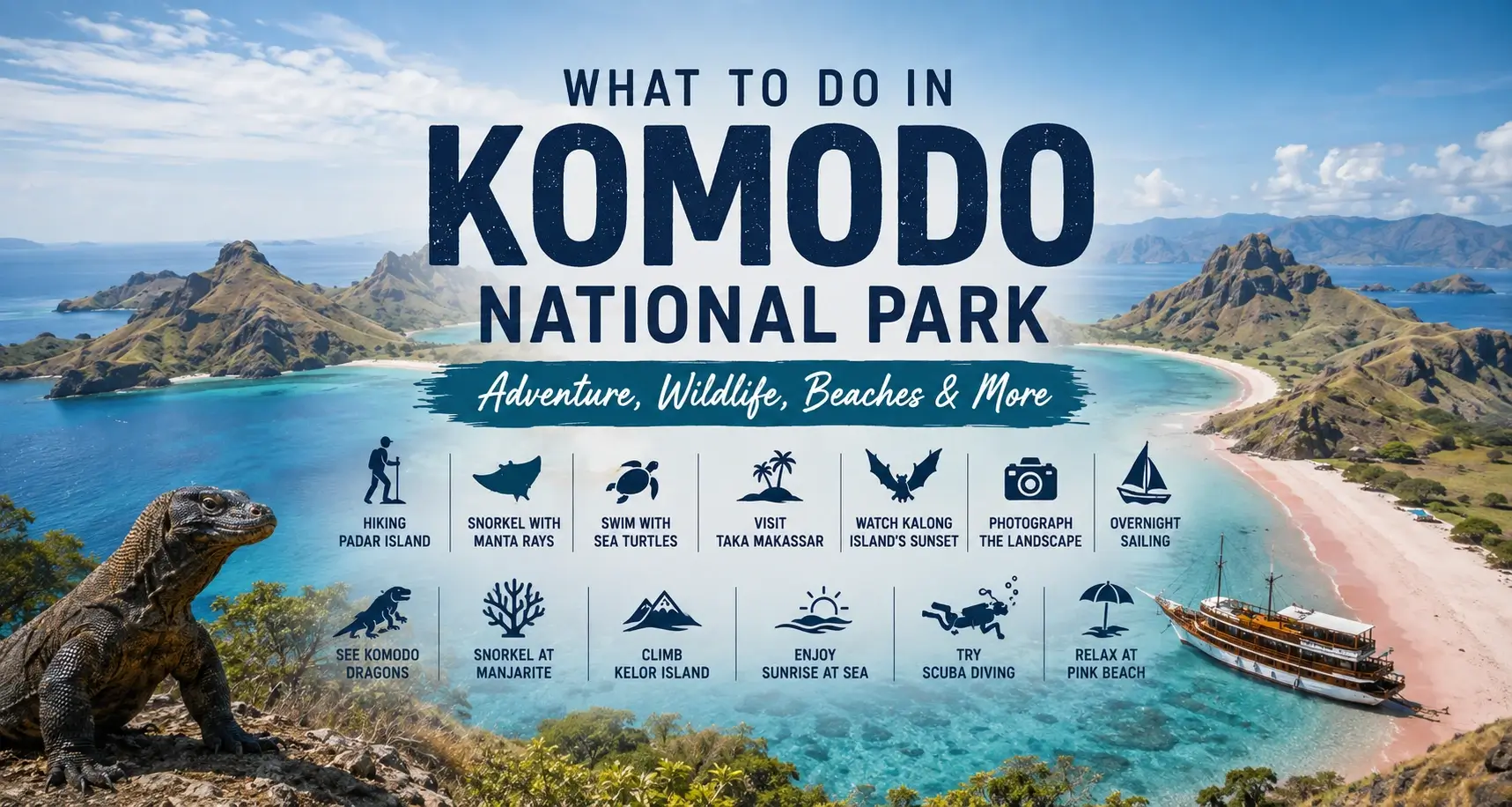
The best things to do in Komodo National Park also include hiking, snorkeling, swimming near manta rays, relaxing on pink sand, walking across a tidal sandbar, and watching flying foxes at sunset.
Komodo National Park covers Komodo, Rinca, Padar, and many smaller islands surrounded by coral reefs, strong currents, and clear tropical water. This combination makes the area suitable for travelers interested in wildlife, marine activities, photography, beaches, and overnight sailing. You can also learn more about the park through the official UNESCO World Heritage page
1. Hiking Padar Island
Padar Island is one of the park’s most recognizable destinations. The main trail leads to a viewpoint overlooking several curved bays, rugged hills, and beaches with different colors.
The hike is relatively short but includes stairs, exposed slopes, heat, and uneven sections. Early morning is generally more comfortable because temperatures are lower and the light is softer.
Wear shoes with reliable grip and bring water, sun protection, and only essential equipment. Travelers can read the complete Padar Island guide before departure.
2. Relax at Pink Beach
Pink Beach is known for its reddish pink sand, created by small red marine particles mixed with pale sand. The color can look stronger or lighter depending on sunlight, moisture, tide, and camera settings.
Visitors can swim, snorkel, walk along the shoreline, or rest after trekking. The beach has limited natural shade, so a hat, sunscreen, drinking water, and a dry bag are useful.
Never collect sand, shells, or coral fragments. Learn more through the Pink Beach Komodo guide.
3. Snorkeling at Manta Point
Manta Point is one of the most anticipated snorkeling locations in Komodo National Park. When conditions are suitable, visitors may see manta rays feeding or moving through current rich water.
Sightings are never guaranteed because manta rays are wild animals. Their presence depends on plankton, currents, water temperature, visibility, and natural movement.
Swimmers should keep a respectful distance and avoid touching, chasing, blocking, or swimming directly above the animals. Read the Manta Point Komodo guide before joining the tour.
4. Explore Taka Makassar
Taka Makassar is a narrow sandbar surrounded by shallow turquoise water. Its visible size changes with the tide, so part of the sandbar may be exposed during low tide and partly submerged when the water rises.
Visitors usually stop for photography, shallow swimming, relaxing, and snorkeling around suitable reef areas. Its location near Manta Point makes it a practical combination within one route.
Taka Makassar is included in several itineraries, including the two day Komodo tour from a hotel.
5. Snorkel wit the Sea Turtles
Siaba Island is commonly associated with sea turtle sightings. Depending on visibility and animal movement, visitors may see turtles swimming above coral, feeding near seagrass, or resting below the surface.
Travelers should avoid crowding turtles or preventing them from reaching the surface. Keep a comfortable distance, move slowly, and let the animal control the encounter.
Beginners should tell the guide about their swimming ability before entering the water. A life jacket can provide additional support in unfamiliar conditions.
6. Whatch Kalong Island's Sunset
Kalong Island offers one of the park’s most distinctive evening experiences. Around sunset, large flying foxes leave the mangrove forest and travel across the sky in search of food.
Visitors normally watch from the boat rather than landing on the island. This reduces disturbance to the animals and protects the mangrove habitat.
Kalong Island is often included in an overnight route such as the two day Komodo tour by wooden boat, together with Kelor, Manjarite, Padar, Pink Beach, Taka Makassar, and Manta Point.
7. Climb Kelor Island
Kelor Island offers a shorter but steeper climb than Padar. The hill begins close to the beach and provides views over the coastline, nearby islands, and anchored boats.\
The path can be loose and slippery, especially after rain. Stable footwear is recommended even though the climb does not take long.
After descending, visitors can swim, relax on the beach, or continue to a nearby snorkeling destination.
8. Snorkel at Manjarite
Manjarite is known for its wooden jetty, shallow water, and relatively relaxed snorkeling atmosphere. It is frequently included at the beginning of multi day Komodo itineraries.
Visitors may see coral formations and small reef fish around the bay. Even when the water appears calm, entry points and swimming areas should follow the guide’s instructions.
Avoid standing on coral or using it for balance. Shallow reefs are easily damaged by fins, hands, and uncontrolled movement.
9. Spend the Night Aboard
An overnight boat tour allows travelers to experience Komodo at a slower pace. Guests can watch sunset and sunrise from the deck, sleep near the islands, and reach some destinations before day trip groups arrive.
Boat facilities vary considerably. Before booking, check:
- Cabin type
- Air Conditioning or Fan
- Private or Shared Bathroom
- Passenger Capacity
- Safety Equipment
- Meals and Drinking Water
- Electricity availability
- Private or Sharing Format
Top Komodo Tour offers several Komodo boat tour services for different budgets and comfort levels.
10. Try Scuba Diving
Komodo National Park is also known for strong current dive sites, coral walls, channels, and cleaning stations. Certified divers may encounter reef fish, turtles, sharks, manta rays, and other marine life.
Current conditions vary significantly between sites. Dive operators must select locations according to weather, tide, certification, and recent experience.
Komodo is not an appropriate destination for divers to overestimate their ability. Beginners should choose operators that provide conservative site selection and clear safety briefings.
11. Photograph the Landscape
The park offers several distinct photography settings:
- Padar Island for Panoramic Hills
- Pink Beach for sand and water contrast
- Taka Makassar for aerial sandbar view
- Kelor Island for compact coastal scenery
- Manta Point for Underwater photography
- Meals and Drinking Water
- Electricity availability
- Private or Sharing Format
A waterproof case or dry bag is important during beach landings and small boat transfers. Drone users should confirm local restrictions and permits before flying.
12. Observe other wildlife
Besides Komodo dragons, ranger led walks may reveal deer, wild boar, monkeys, water buffalo, and various bird species. Sightings depend on location, season, temperature, and animal movement.
Visitors must remain with the ranger and follow the designated trail. Feeding or approaching animals for photographs can create dangerous behavior and disrupt the ecosystem.
Komodo and Rinca are natural habitats, not controlled wildlife parks, so no specific animal sighting can be guaranteed.
13. Visit Long Pink Beach
Long Pink Beach is different from the betterknown Pink Beach on Komodo Island. It is generally associated with the Padar area and offers a longer, more open shoreline.
Its sand often appears softer or more pastel than the brighter reddish tone seen at Pink Beach. The location chosen by a tour may depend on route, sea conditions, and visitor traffic.
Travelers who specifically want to visit Long Pink Beach should confirm the planned stop before booking.
14. Enjoy sunrise at the sea
Sunrise sailing is one of the advantages of a multiday trip. The boat may remain anchored near an island or begin moving toward the first destination before other groups arrive.
Morning conditions are often cooler and more comfortable for trekking. The light is also softer for photography, especially around Padar, Kelor, and coastal anchorages.
An early start can reduce crowd levels, although actual schedules depend on weather, tide, and harbor procedures.
Choose the right tour
A one day speedboat tour is suitable for travelers with limited time. The one day Komodo tour from a hotel commonly combines Padar Island, Pink Beach, Komodo Island, Taka Makassar, Manta Point, and another snorkeling stop.
A two or three day boat trip provides more time for Kelor Island, Manjarite, Kalong Island, sunrise sailing, and longer periods at each destination.
The three day Komodo open trip is suitable for travelers who prefer a broader route and overnight experience at a shared cost.
Explore the available Komodo Island tour packages from Labuan Bajo to compare one day, private, shared, and multiday options. Top Komodo Tour can recommend an itinerary based on travel time, swimming ability, preferred activities, and comfort requirements.
FAQ things to do in Komodo Nationsl Park
Visitors can hike Padar and Kelor, snorkel at Manta Point and Siaba, relax at Pink Beach, walk on Taka Makassar, and watch flying foxes at Kalong Island.
One day is enough for several major highlights by speedboat. A multiday tour provides more time for additional islands, sunset, sunrise, and overnight sailing.
Yes, at suitable locations and under guide supervision. Currents vary, so beginners should explain their ability and use a life jacket when necessary.
No. Manta rays move naturally according to currents, food availability, and water conditions.
Yes. Hiking, beach visits, wildlife walks, sandbar stops, sunset viewing, and boat experiences do not require advanced swimming ability.
