
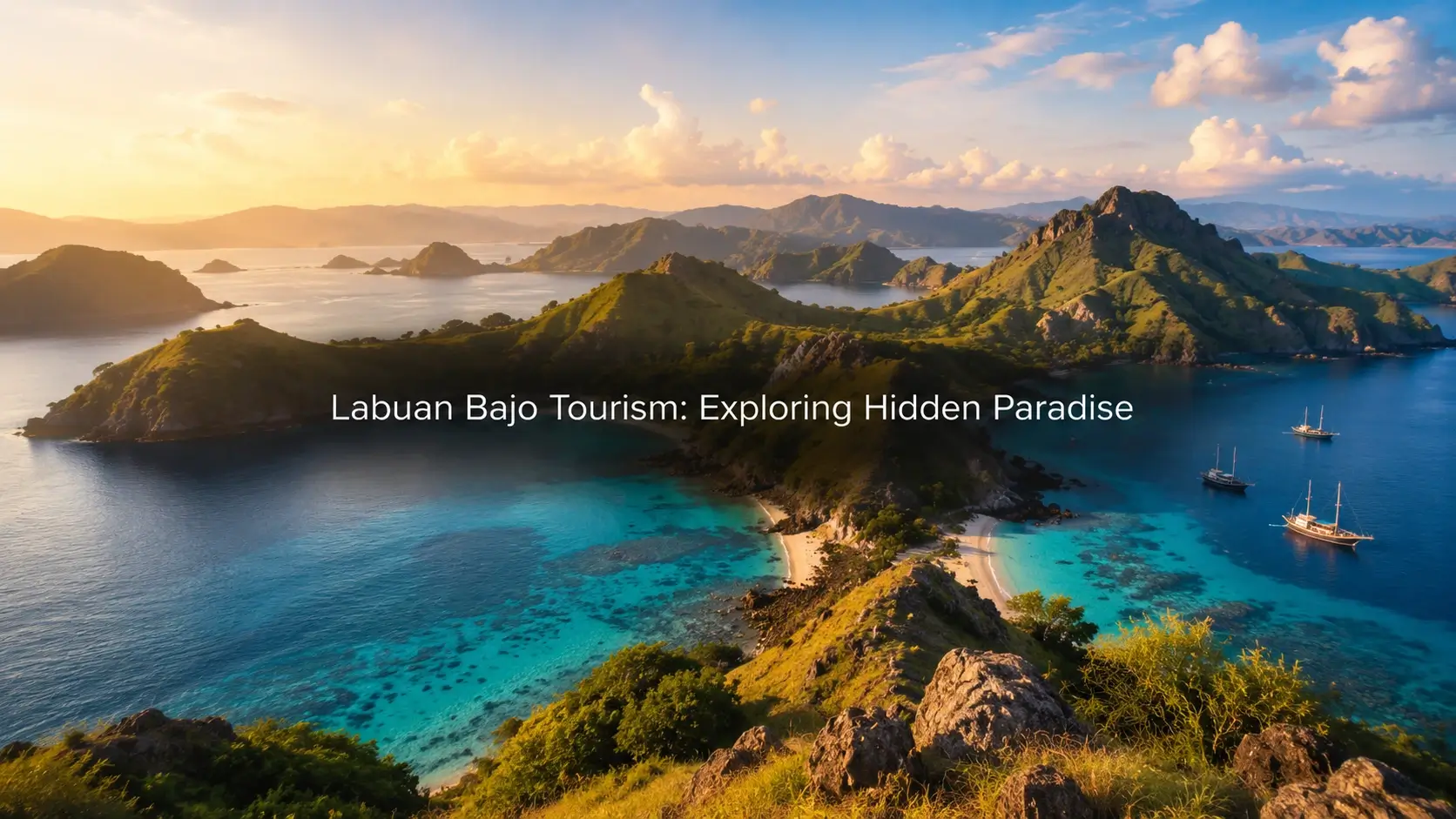
Labuan Bajo: Where Ancient Dragons Meet Pristine Seas – Your Ultimate Guide to Indonesia’s Eastern Paradise
The tourism industry continues to shine its spotlight on the eastern regions of Indonesia, which hold millions of natural wonders that captivate the international community. One of the main attractions currently serving as a primary magnet for both local and international tourists is a coastal region located in West Manggarai Regency. When planning a vacation to this area, many people remain geographically confused; in fact, it is not uncommon for search engines to record the query labuan bajo located in bali as one of the most popular auto complete suggestions.
In reality, this main gateway to Komodo National Park is administratively located in the East Nusa Tenggara Province and possesses natural characteristics that are very distinct and unique compared to the Island of the Gods. This region offers a savanna landscape that appears arid yet exotic during the dry season, clusters of ancient coral islands jutting into crystal clear blue waters, and marine biodiversity whose reputation has been recognized by divers from all corners of the world.
The Unrivaled Beauty of Labuan Bajo
Discussing the beauty of labuan bajo is seemingly endless, as every corner of this region is like a natural canvas painted to perfection. This destination, which officially holds the pride of being a Super Priority Tourism Destination (DPSP), presents a harmonious blend of neatly aligned hill clusters, stretches of calm sea with refreshing turquoise gradients, and the richness of coastal culture where the people warmly welcome visitors. As the plane you are on begins its descent toward Komodo International Airport, the view of the small island landscapes from the air is enough to leave anyone breathless in awe.
The main charm of this region certainly does not lie solely in the existence of the legendary endemic ancient reptiles, but is also embedded in every inch of land and water that promises both soul soothing tranquility and adventure that will get your adrenaline pumping. It is no wonder that information searches regarding labuan bajo tourism consistently rank at the top of many people’s travel bucket lists. For content creators, professional photographers, and aesthetics enthusiasts, the sunlight that falls on the western tip of Flores Island is famous for having a magical nuance, capable of producing stunning and compelling travel visual works.
What to Do in Labuan Bajo?
For those of you planning your first trip to set foot on this archipelago, you are likely curious about what to do in labuan bajo so that your valuable vacation time can be maximized without any regrets. You need not worry, as there are plenty of travel agenda options that can be configured and adjusted to your personal vacation style. Below are some extraordinary experiences that flow into a mandatory agenda while you spend time in this stunning archipelago:
- Joining a multi day cruise on a magnificent traditional wooden phinisi boat to sail the open sea and experience the magical sensation of spending the night under a blanket of millions of stars illuminating the waters of Komodo National Park
- Walking through the lush forests and savannas on Komodo Island or Rinca Island under the strict guidance of a professional local ranger to see, from a safe distance, the activities of giant lizards from the ancient era that are highly respected
- Setting aside special time to set foot on the sandy expanse of the pink beach labuan bajo, which radiates a natural pink hue caused by the mixture of fine white sand and fragments of microscopic shells from organisms called foraminifera
- Diving into the mystery of the underwater world at the Manta Point dive site, which consistently offers an unforgettable spiritual experience when you get the chance to swim alongside a pod of giant manta rays gliding gracefully against the ocean current
- Starting a pre dawn hike, climbing hundreds of wooden steps to the peak of Padar Island to welcome the sunrise as it slowly illuminates three perfectly curved bays with different sand color gradients on each side
- Taking the time to visit local tourism villages such as Liang Ndara Village to delve into the authentic culture of the indigenous Manggarai people and witness the heroic excitement of the Caci dance, which is rich with meanings of brotherhood and sportsmanship
Exploring the Exoticism of the Main Island by Motorcycle
Although most main tourist attractions often require travelers to rent a boat and cross between islands for hours, the activity of exploring the main island around this tourism hub has surprisingly evolved into a unique vacation trend for independent travelers or backpackers who crave freedom of expression and a more flexible schedule.
The gentle coastal sea breeze hitting your face and the smooth, sharp winding hill roads offer a land based adventure sensation that is very refreshing to the mind. The following are various charms of tourist destinations on the main island of Flores that have proven to be easily accessible just by renting a daily two wheeled vehicle:
- Directing your motorcycle towards the bukit cinta labuan bajo area shortly before dusk arrives gives you a precious opportunity to sit back and enjoy the view of the open sea and green hills that slowly turn into silhouettes as the sun sinks below the horizon
- Pushing your vehicle toward the north of the city through dusty roads to eventually discover the charm of Rangko Cave, which hides a secret saltwater pool within its dark cavity, with sunlight refraction bouncing beautifully like glowing blue crystals
- Parking your vehicle for a moment at the Waringin Peak area, whose architecture is designed to be very aesthetic with local nuances, to see the hustle and bustle of the port from above, with rows of luxurious phinisi boats anchored peacefully at the pier
- Enjoying the very relaxed afternoon breeze mingling with local residents on the coast of Pede Beach, which is located very close to the city center, while sitting on the sand and tasting various light snacks that are sold simply on the roadside
- Visiting the Batu Cermin Cave area, which is located not far from the airport crowds, to witness unique ancient natural phenomena in the form of fossil remains of marine animals that are permanently attached to the cave walls and narrow rock crevices that are capable of reflecting blinding sunlight
The Role of BPOLBF in Developing a Sustainable Tourism Ecosystem
The rapid development and surge in popularity occurring in this archipelago certainly require a highly structured and visionary management framework so that the natural beauty and social welfare of the local community are maintained in the long term. This is where the essential and strategic role of BPOLBF labuan bajo, or formally known as the Labuan Bajo Flores Tourism Authority Agency, lies.
They continue to work hard to build a foundation for a high quality tourism ecosystem that prioritizes the principles of environmental sustainability. This authority does not solely focus its performance on massive physical infrastructure development for hotels or highways, but also actively designs various capacity building programs and quality improvements for human resources throughout the Floratama coordinating area, which includes mainland Flores, Lembata, Alor, and Bima.
Through various creative initiatives that empower the community, such as organizing annual cultural festivals, digital training programs for micro entrepreneurs, and integrated environment conscious area arrangements like Parapuar, the regional and central governments are trying to unite their vision to ensure that every tourism investment flow will always provide a positive, inclusive, and equitable economic rotation for the indigenous people of the area.
This concept of sustainable tourism essentially aims to invite every visiting tourist not just to come to satisfy their ego by enjoying natural beauty, but also to participate and take full responsibility in efforts to minimize carbon footprints, reduce waste production, and deeply respect the noble values of local wisdom that live and take root strongly in the midst of the West Manggarai society.
A trip to the Komodo island area is a journey of reflection and a profound spiritual experience that will help reconnect your soul’s empathy with the splendor of the universe’s creation, which is unparalleled. Let every joyful step you take on the stretch of savanna, every breath of awe you take in the clear seawater, and every curve of a sincere smile you exchange with the friendly smiles of local residents be an inseparable part of your dedication to maintaining the preservation of this small paradise ecosystem. By choosing Top Komodo Tour as your trusted travel partner, you ensure this charm can continue to eternally enlighten the world to be enjoyed by many generations to come.
Frequently Asked Questions (FAQ)
Although not legally required for domestic tourists, it is highly recommended to have travel insurance that covers marine activities and emergency medical evacuation, given the remote nature of the destination, which is often in secluded areas out at sea.
Cell signal connections in the middle of the sea are very erratic, so you should not rely too much on internet data. However, it is recommended to download location maps offline and inform your travel plans to relatives before the boat leaves the pier.
Banking facilities and ATMs are only concentrated in the Labuan Bajo city center, so you are required to withdraw enough cash before starting your trip to small islands or conservation areas that have no access to electricity or digital transactions.
The travel season with the lowest tourist density usually falls between November and March, but you must remain alert to maritime weather forecasts because, during that period, there are often higher waves and more intense rainfall compared to other months.
You are strictly prohibited from taking, damaging, or bringing home even the smallest components of nature such as sand, stones, or coral from within the Komodo National Park area because such actions are a serious violation of the country’s protected environmental conservation laws.
