Komodo Dragon Indonesia
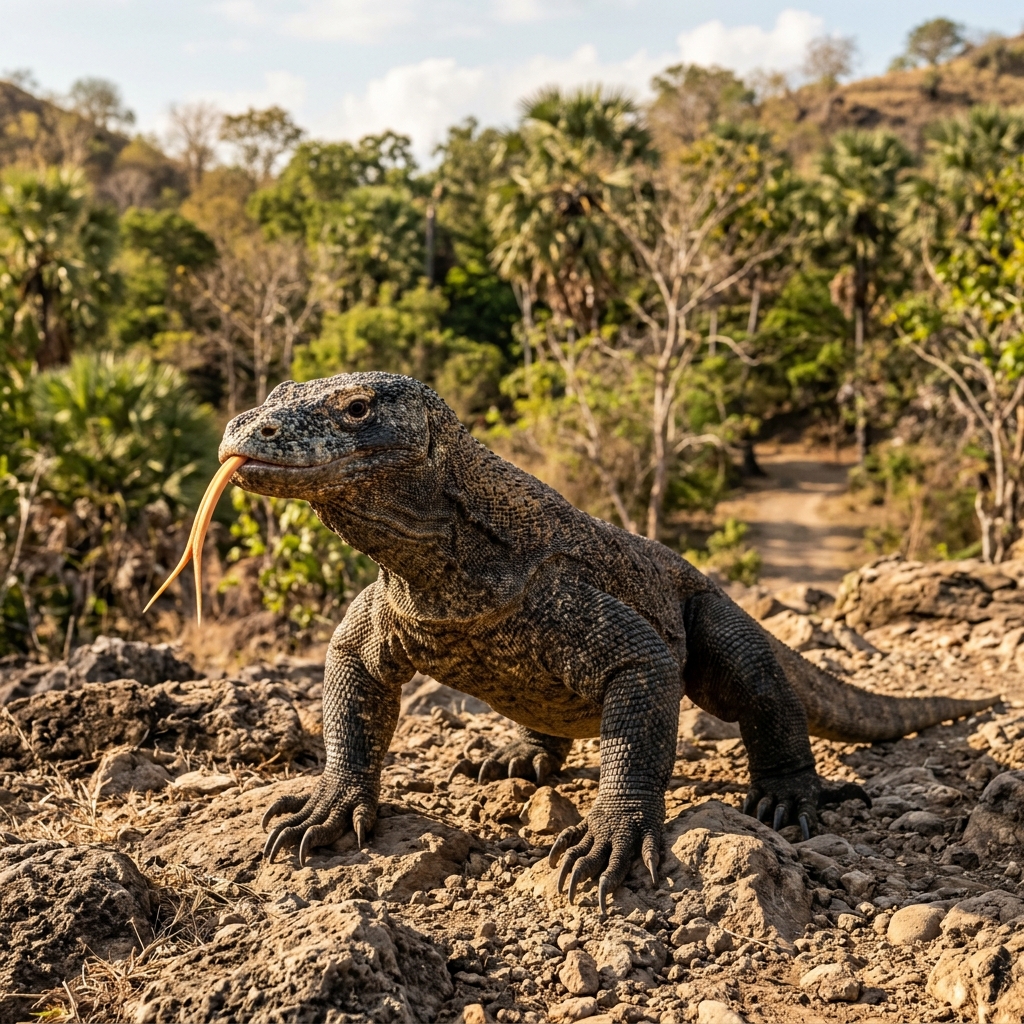
A Komodo Dragon in its natural habitat, Komodo National Park
The Komodo Dragon (Varanus komodoensis) is the world's largest living species of lizard and one of the most extraordinary animals on Earth. These magnificent prehistoric reptiles are found only on a handful of Indonesian islands — primarily Komodo, Rinca, and the western tip of Flores — making them one of the most sought-after wildlife encounters on the planet.
Komodo Dragon Facts
- Scientific name: Varanus komodoensis
- Length: Up to 3 meters (10 feet)
- Weight: Up to 70 kg (154 lbs)
- Lifespan: Up to 30 years in the wild
- Diet: Carnivorous – deer, wild boar, water buffalo, and carrion
- Conservation status: Vulnerable (IUCN Red List)
- Estimated wild population: Approximately 3,000–5,000 individuals
Habitat and Distribution
Komodo dragons are found only within Komodo National Park, a UNESCO World Heritage Site established in 1980. The national park covers five main islands: Komodo, Rinca, Padar, Gili Motang, and Nusa Kode, plus numerous smaller islands and surrounding marine areas.
These lizards thrive in the hot and dry savannah grasslands and tropical deciduous forests of the islands. They are particularly abundant on Komodo Island and Rinca Island, where rangers lead guided treks to observe them safely in the wild.
Physical Characteristics
Komodo dragons have a distinctive appearance — a long, flat head with rounded snout, scaly skin, bowed legs, and a massive, muscular tail. They use their long, forked yellow tongue to detect scent particles in the air, much like a snake. Their skin is reinforced by small bones called osteoderms, forming a kind of natural chain mail armor.
Hunting and Diet
As apex predators, Komodo dragons hunt using a combination of ambush strategy and their highly effective venom. Contrary to the old belief that bacteria in their saliva kills prey, scientists have now confirmed that Komodo dragons possess venom glands in their lower jaw that produce anticoagulant compounds. A bitten animal may escape initially but eventually weakens from blood loss and shock, allowing the Komodo to track and consume it.
They feed on deer, pigs, goats, and occasionally attack large water buffalo. Young Komodo dragons are more arboreal and feed on small lizards, eggs, and insects to avoid being eaten by adults.
Reproduction
Komodo dragons have a remarkable reproductive ability — females can reproduce via parthenogenesis, meaning they can produce offspring without fertilization by a male. This makes them particularly resilient as a species. Eggs are usually laid in September and incubate for about 8 months before hatching.
Conservation Status
Listed as Vulnerable by the IUCN, the Komodo dragon faces threats from habitat loss, poaching of their prey species, and the effects of climate change on sea levels which could reduce available habitat. Komodo National Park plays a crucial role in protecting this species, with strict regulations on visitor numbers and behavior to minimize disturbance.
How to See Komodo Dragons
The best and safest way to encounter Komodo dragons in the wild is through a guided trek in Komodo National Park, departing from Labuan Bajo. Visitors must always be accompanied by an official park ranger. The two main destinations for dragon sightings are:
- Komodo Island – Larger island with more trails and higher dragon population density
- Rinca Island – Closer to Labuan Bajo (about 2 hours by boat), often easier to spot dragons near the ranger station
Top Komodo Tour arranges daily guided tours to both islands as part of our 1D Komodo Tour From Hotel, 3D Komodo Dragon Tour, and longer packages.